Academic Year 2020/21 | Academic Year 2021/22 | |
|---|---|---|
| Nomination Deadline | Fri, 29/05/2020 | Fri, 28/05/2021 |
| Application Deadline | Fri, 12/06/2020 | Fri, 11/06/2021 |
| Arrival Date | Wed, 16/09/2020 | Wed, 15/09/2021 |
| Welcome Meeting | Thu, 17/09/2020 | Thur, 16/09/2021 |
| International Orientation | Thu, 17/09/2020 | Thur, 16/09/2021 |
| Welcome Week | Mon, 21/09/2020 | Mon, 20/09/2021 |
| Latest Module Submission | Wed, 23/09/2020 | Wed, 22/09/2021 |
| Semester 1 Classes Start | Mon, 28/09/2020 | Mon, 27/09/2021 |
| Module Add/Drop Period Ends | Fri, 09/10/2020 | Fri, 08/09/2021 |
| Christmas Holidays Start | Sat, 19/12/2020 | Sat, 18/12/2021 |
| Semester 1 Exams Start | Mon, 11/01/2021 | Mon, 10/01/2022 |
| Semester 1 Ends | Fri, 22/01/2021 | Fri, 21/01/2022 |
| Latest Module Submission | Thu, 21/01/2021 | Thur, 20/01/2022 |
| Semester 2 Classes Start | Mon, 25/01/2021 | Mon, 24/01/2022 |
| Easter Holidays Start | Sat, 27/03/2021 | Sat, 02/04/2022 |
| Semester 2 Resumes | Mon, 12/04/2021 | Mon, 25/04/2022 |
| Farewell Meeting | Wed, 28/04/2021 | Wed, 04/05/2022 |
| Semester 2 Exams Start | Mon, 03/05/2021 | Mon, 09/05/2022 |
| Semester 2 Ends | Fri, 28/05/2021 | Fri, 03/06/2022 |
Uncategorised
Protected: CST on super computer
fortran external function usage
external function usage may need change, see following example we met when use IVF19 (don’t need declare) to compile old code works on IVF9 (need declare)

Increase wordpress max upload size
1: Theme Functions File
There are cases where we have seen that just by adding the following code in theme’s functions.php file, you can increase the upload size:
| 123 | @ini_set( 'upload_max_size' , '64M' );@ini_set( 'post_max_size', '64M');@ini_set( 'max_execution_time', '300' ); |
2. Create or Edit an existing PHP.INI file
For this method you will need to access your WordPress site’s root folder by using FTP or File Manager app in your hosting account’s cPanel dashboard.
In most cases if you are on a shared host, then you will not see a php.ini file in your directory. If you do not see one, then create a file called php.ini and upload it in the root folder. In that file add the following code:
| 123 | upload_max_filesize = 64Mpost_max_size = 64Mmax_execution_time = 300 |
This method is reported to work for many users. Remember if 64 doesn’t work, then try 10MB (sometimes that work).
LIBS 激光诱导解析光谱系统
LIBS 激光诱导解析光谱系统
激光诱导击穿光谱,“Laser Induced Breakdown Spectroscopy, LIBS”,是基于脉冲激光技术、时间分辨高分辨全谱直读技术的一种元素分析方法,广泛应用于物质分析、成份检测、污染及有害物分析、物质鉴定、激光加工过程分析等领域。
一、原理
1.1 LIBS 在本质上是一种原子发射光谱技术。
任何元素的原子,可被外界能量激发到激发态,从激发态跃迁回到基态或中间态时会辐射出光子;这种发射光的波长分布称为原子发射光谱。
原子发射光谱有两大特征:1)通常而言,原子发射光谱为系列线谱;2)谱线的位置、相对强度仅跟原子序数及所处的电离态有关,与其它因素无关(不考虑同位素发射谱之间的精细差别),不同元素的发射谱不相同。目前所知的元素,其发射光谱均有详尽的数据,因此,原子发射光谱是*常用的元素分析的工具。
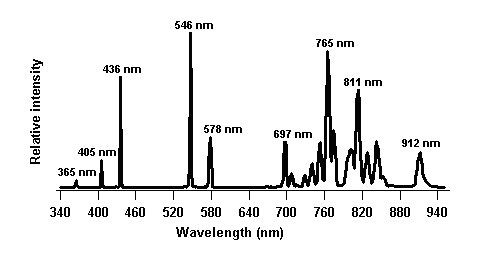
作为原子发射光谱的一种,LIBS通常采用纳秒脉宽、1064nm的高功率Nd:YAG脉冲激光器,对样品进行离化、加热;采用时间分辨的高分辨率全谱直读光谱仪进行探测。
因此,LIBS是一种采用激光作为离化、加热装置的新型时间分辨原子发射光谱技术。
1.2 LIBS的具体过程
短脉冲激光(数十mJ,<10ns)被聚焦到1GW/cm^2量级,入射到样品上(可为固体、液体甚至气体);样品离化成为等离子体;激光加热等离子体,局部*高电子温度可达十万K;激光脉冲中止,等离子体热平衡,平衡温度约为一万K左右;平衡后离子获得足够能量并开始膨胀,等离子体进一步降温;此期间辐射主要是黑体辐射和轫致辐射,其表现为紫外~可见~近红外连续谱,并随时间逐渐红移;约10微秒时间以后,等离子体温度降低,此时辐射以离子与电子复合辐射为主,表现为紫外~可见的分立线谱;此即需要探测的元素发射光谱。 1.3 LIBS对仪器设备的要求
一台能量足够的、带同步内外触发的纳秒脉冲激光器;延时脉冲发生器;分辨率达到0.1nm及以下,并能全谱直读的光谱仪*;带延时及门控(至少微秒量级)的探测器。对分辨率和覆盖范围的要求,都来自于元素分辨的需求。原子发射光谱非常复杂,要区分不同的元素的相近谱线,需要相当好的分辨率和准确性;同时,通过比对多条谱线(同一元素的不同价态的谱系)来确定一个元素是*准确的方法,因此,光谱覆盖范围要求达到紫外 ~ 可见。 二、LIBS技术优势
2.1与其它类型的原子发射光谱技术相比,LIBS具备以下优势:
无损或微损检测。LIBS测量中,激光仅仅作用于微米量级的区域,对样品基本无损;基本无需样品制备,避免了样品在制备中的污染;可通过重复测量一个点,对样品表层以下做成分分析,或避免表面污染的影响;可以通过机械结构对样品表面进行扫描,做Mapping分析;适用于几乎任何形态的样品:固体;液体;气体。适用于各种体系的元素分析:化合物、溶液、悬浊与悬浮混合物、合金等;相对于其它原子发射光谱技术,LIBS实验非常快速便捷,通常几秒钟就能出结果;LIBS纯光学技术,这意味着实验装置和样品间只有光学接触,系统可以很方便的跟其它光学装置(望远镜、显微镜、光纤),实现微区测量、远程测量甚至遥测;LIBS系统可仪器化、全固化、小型化及整体化,相对于大型实验室分析设备,有极强的移动性和灵活性,可很方便的用于现场测量;仪器对于供电等配套要求非常简单(无须大功率供电产生射频电磁场),有极强的环境适应能力(无须氧气及氧化剂,对有害气体不敏感,全固化系统可防震、冻、热、尘),因此可适用在极端场合;作为一个典型案例,因为便携式XRF被证明在尘土环境中不适用,因此美国已经用LIBS系统代替XRF系统用于火星表面成份探测; 2.2与其它元素分析方式(XRF)相比,LIBS具备以下优势:
对轻元素(如氮等)的鉴别能力远远超过XRF;实践中的XRF只能测量纳及更重的元素;测量过程中不使用高能射线,不会穿透样品,对人体无害。 三、应用
作为一种元素分析技术,LIBS的主要应用包括:1)化学、材料领域,实验室用成份分析;2)冶金工业领域,合金成分分析,杂质成份分析;3)激光加工(脉冲激光切钻焊、脉冲激光冲击强化)科研级应用中,中间过程分析;4)能源及矿产领域:石油、煤炭等成份分析;5)机械动力领域科研级应用:如航空润滑油金属微粒分析;6)地质探矿,地质考古;7)文物古籍鉴定(古铜、铁、瓷、玉鉴定,书画油墨鉴定);8)国防和安全:管制物品(如炸药)检测;生化武器监控;9)建筑:建筑材料(石、砖、瓷、玻璃等)分析;10)刑侦和鉴定:牙齿骨骼头发元素分析;宝石、贵金属元素分析;11)环境分析:RoHS检测:工业及民用产品中有害元素检测;水中污染物监测:重金属离子及总氮(TN)、总磷(TP)含量检测;烟尘及气体排放中有害元素检测;土壤重金属污染检测及总氮检 测;12)农林业:农作物、木材有害成份检测

土壤和蕃茄叶片的残留有害元素含量检测
四、 仪器组成典型的LIBS装置应该由如下部分组成:
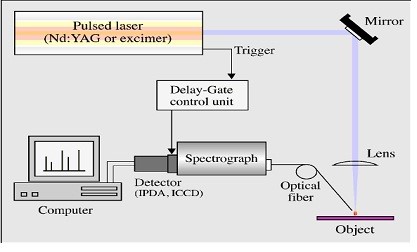
LIBS系统简图
1、激光:一般用纳秒量级,数十毫焦能量以上的固体激光,1064nm或532nm;2、延时脉冲发生器:在精度在微秒及以下的延时脉冲发生器;3、光搜集装置:透镜+光纤;4、光谱仪和探测器:分辨率在0.1nm及更好的光谱仪;门控在微秒及以下的多通道探测器。 五、相关产品
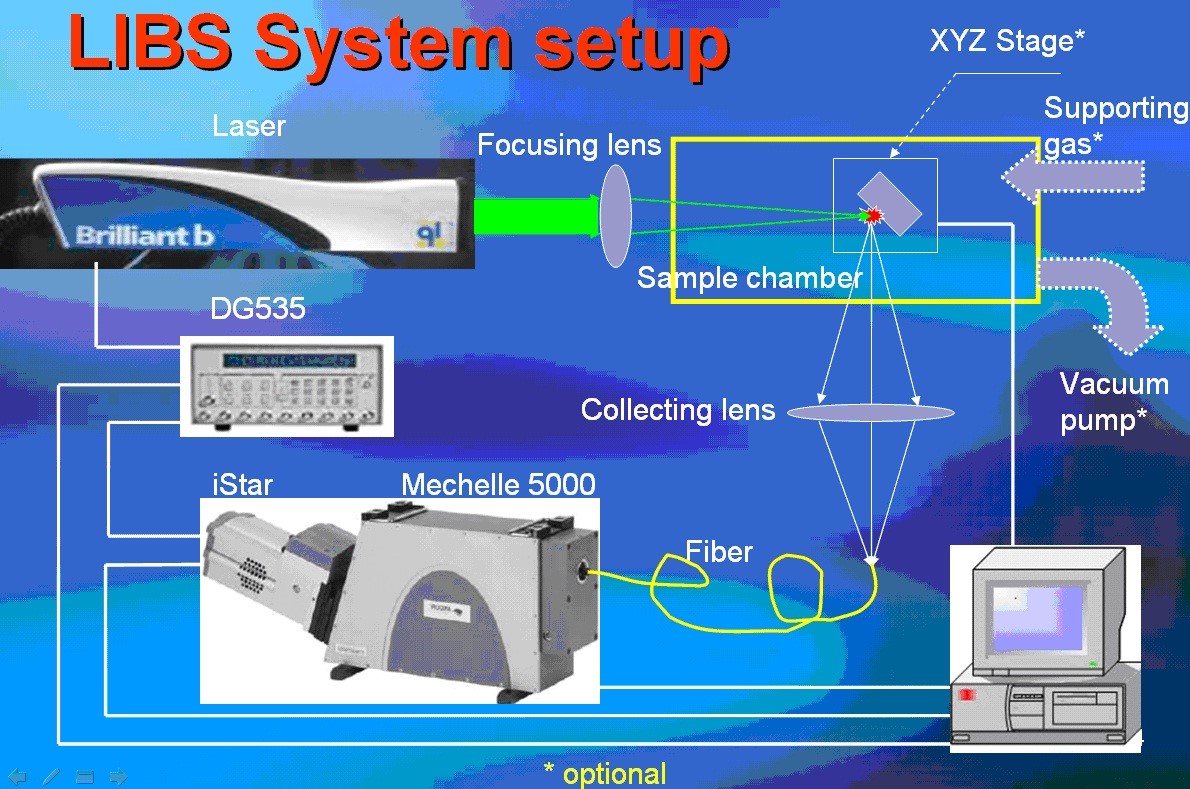
先锋科技可提供高端研究级LIBS系统的全套设备:
1)法国Quantel公司 Brilliant、CFR、Ultra系列激光器,也可选配OPO激光器;1064nm能量从50mJ ~ 850mJ/pulse;Brilliant系列激光器为紧凑型固体Nd:YAG激光器,模块化结构,方便组配多个波长。即插即用型激光器,无须调试,非常适合实验室使用,也可移动使用;CFR/Ultra激光器为按照美国军标生产的紧凑型激光器;其抗震、耐温、耐恶劣环境的特征,及小巧的激光头与电源的体积,使得该类型激光器非常适合移动使用。
2)美国DG535/DG645脉冲发生器四通道数字脉冲延时发生器;0-999秒延时可控;5ps延时分辨率,<50ps抖动,<1.5ns 延时精度
3)英国Andor公司Mechelle中阶梯光栅光谱仪唯一的商品化中阶梯光栅光谱仪全谱直读:200nm ~ 975nm光谱覆盖范围,可探测所有元素的原子发射光谱;高分辨率:光谱分辨能力(l/Dl)= 5000(0.1nm @ 500nm);专利设计的分光结构,光学交叉干扰<10-2;自动温度补偿,有效保持波长准确性;
丰富的配件(建议选配)
1.光收集器,用于收集LIBS信号并通过光纤传导到光谱仪;2.用于波长校准的汞氩灯标准光源3.用于强度校准的复合光源(定量分析用)Andor-Solis软件,包括所有的元素谱线位置,自动分析样品成份
4)英国Andor公司iStar ICCD探测器180nm ~ 850nm响应,覆盖全部元素光谱 2ns门宽,带来精细的时间分辨能力和低占空比信号检出能力;ICCD具备103量级的光增益,系统灵敏度大为提高,非常有利于检出微量、痕量元素组分
5)选配组件基于先锋科技强大的系统整合能力,可为用户提供实验所需的光学调整架、光学平台、透镜等光学元件,及部分实验所需的样品室、电控及手动平移台等等产品,提供完整的LIBS实验平台
AI and deep learning resource
TensorFlow in Google Colaboratory
Intro to Machine Learning (ML Zero to Hero – Part 1)
 # simple neural network code example on Colab
import tensorflow as tf
from tensorflow import keras
import numpy as np

model = keras.Sequential([keras.layers.Dense(units=1,input_shape=[1])])
model.compile(optimizer='sgd',loss=keras.losses.MeanSquaredError())

xs = np.array([-1.0,0.0,1.0,2.0,3.0,4.0],dtype=float)
ys = np.array([-3.0,-1.0,1.0,3.0,5.0,7.0],dtype=float)

model.fit(xs, ys, epochs=500)

print(model.predict([10.0]))
Call for papers: Photonic jet special issue
Aerosol Jet printing (AJP)
Company: https://www.sirris.be/aerosol-jet-printing
OPTOMEC: https://www.youtube.com/watch?v=m1YqgEGrbPQ
A review of aerosol jet printing—a non-traditional hybrid process for micro-manufacturing
Abstract
Aerosol Jet Printing (AJP) is an emerging contactless direct write approach aimed at the production of fine features on a wide range of substrates. Originally developed for the manufacture of electronic circuitry, the technology has been explored for a range of applications, including, active and passive electronic components, actuators, sensors, as well as a variety of selective chemical and biological responses. Freeform deposition, coupled with a relatively large stand-off distance, is enabling researchers to produce devices with increased geometric complexity compared to conventional manufacturing or more commonly used direct write approaches. Wide material compatibility, high resolution and independence of orientation have provided novelty in a number of applications when AJP is conducted as a digitally driven approach for integrated manufacture. This overview of the technology will summarise the underlying principles of AJP, review applications of the technology and discuss the hurdles to more widespread industry adoption. Finally, this paper will hypothesise where gains may be realised through this assistive manufacturing process.
aerosol jet vs ink jet
Dear Mr. Jiang,in my opinion, there are three major differences between the aerosol jet and ink-jet printing:1. Print resolution;2. Viscosity of ink (suspensions);3. The distance from the printhead to the substrate.1. Aerosol printing allows to achieve a higher print resolution, namely, almost 2-4 times higher than inkjet.(Typical resolution printing with a of aerosol jet is 10 microns, several studies reported print resolution of about 5 microns, while using typical ink jet printing is a minimum resolution of 20-25 microns).2. Method of aerosol jet have less strict requirements for the viscosity of ink (suspension), and therefore, a larger amount of materials (including ceramics, metals, etc.) can be printed by using an aerosol jet.(Typical range of viscosity of ink (suspension) for aerosol jet is in the range from 0.5 to 2000 cP, while the ink jet ink is used with a low viscosity, typically less than 20 cP).3. Aerosol jet has a greater opportunity to vary the distance between the print head to the substrate. Therefore, it is possible to print on non-flat (non-smooth) substrates. In of aerosol jet is possible to create 3D-contacts that inkjet is practically impossible.(A typical distance between the print head to the substrate in the aerosol jet is 1-5 mm, while the ink jet distance is fixed and must be equal, typically 1 mm)However, it is worth noting that the technology of aerosol printing is a younger technology compared to inkjet printing, the 2000s and 1950s, respectively. Consequently, the ink-jet printing more advanced technology, and you have more opportunities to find how to use inkjet printing to apply those or other structures. I also think that inkjet printing is a cheaper way of printing.
For comparison, an industrial aerosol jet printer costs about 500k USD, and the industrial inkjet printer about 200k USD, although it can be found for 50k USD (as a reference).Regarding the possibilities to form structures using ceramic materials and aerosol jet, I recommend the following article: DOI: 10.1016/j.jpowsour.2012.09.094.The last article compared the aerosol jet and ink-jet printing can be found here: DOI: 10.1021/ie503636cSee also the attached picture (Aerosol jet vs Ink Jet.gif).

- Aerosol jet vs Ink Jet.jpg320.86 KB

Cite19 Recommendati
Microsphere with hole
Issue 11, 2011Previous ArticleNext Article
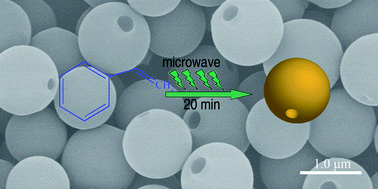
One-step template-free synthesis of monoporous polymer microspheres with uniform sizes via microwave-mediated dispersion polymerization†
Ming-Qiang Zhu,*aGan-Chao Chen,bcYun-Mei Li,bJun-Bing Fan,bMing-Feng Zhua and Zhiyong Tang*c Author affiliations
Abstract
One-step facile synthesis of monoporous polymer microspheres via microwave-controlled dispersion polymerization is introduced. This template-free method employing the dispersion polymerization of styrene under microwave irradiation induces directly the formation of uniform monoporous polymer microspheres, with controllable morphologies and sizes, which can be tuned by simply adjusting parameters for the synthesis. A comparison to conventional heating indicates that microwave irradiation plays a vital role in the formation of this novel morphology.
Deep Subwavelength-Scale Light Focusing and Confinement in Nanohole-Structured Mesoscale Dielectric Spheres
Yinghui Cao 1, Zhenyu Liu 2, Oleg V Minin 3 4, Igor V Minin 5Affiliations expand
- PMID: 30717306
- PMCID: PMC6409861
- DOI: 10.3390/nano9020186
Free PMC article
Deep Subwavelength-Scale Light Focusing and Confinement in Nanohole-Structured Mesoscale Dielectric SpheresDownload
Abstract
One of the most captivating properties of dielectric mesoscale particles is their ability to form a sub-diffraction limited-field localization region, near their shadow surfaces. However, the transverse size of the field localization region of a dielectric mesoscale particle is usually larger than λ/3. In this present paper, for the first time, we present numerical simulations to demonstrate that the size of the electromagnetic field that forms in the localized region of the dielectric mesoscale sphere can be significantly reduced by introducing a nanohole structure at its shadow surface, which improves the spatial resolution up to λ/40 and beyond the solid immersion diffraction limit of λ/2n. The proposed nanohole-structured microparticles can be made from common natural optical materials, such as glass, and are important for advancing the particle-lens-based super-resolution technologies, including sub-diffraction imaging, interferometry, surface fabrication, enhanced Raman scattering, nanoparticles synthesis, optical tweezer, etc.
24V, 210rpm
